
How to treat different types of acne scars: our approach starts with naming the scar correctly, then matching it to the treatments that work on that scar’s structure. Depressed scars, raised scars, keloids and dark marks each respond to different tools. Most patients have more than one type, so the plan usually combines several modalities. At Natural Beauty Fifth Avenue in New York, Charles Jovellano, MS, FNP-BC; Board-Certified Dermatology Nurse Practitioner, builds each acne scar plan around the individual patient.
Acne scars form when a breakout damages the deeper layers of the skin. Inflamed cysts and nodules break down collagen, the protein that keeps skin smooth and firm. As the skin heals, it tries to rebuild that collagen.
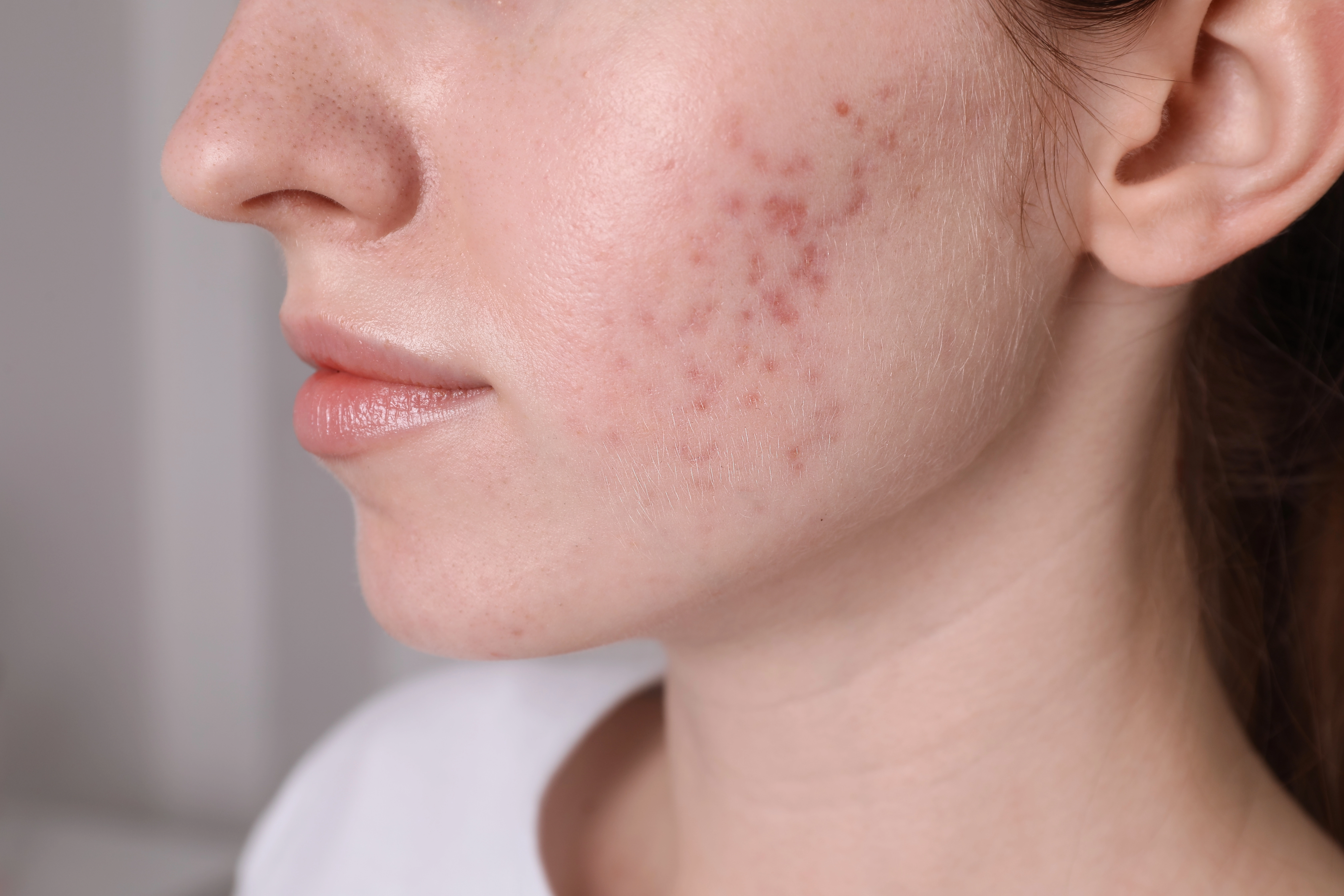
Sometimes the body makes too little collagen. This leaves a pit or depression. Other times it makes too much, which leaves a raised bump. Inflammation can also trigger extra pigment, which leaves dark spots after the breakout clears. Treating active acne early is one of the most effective ways to prevent new scars. We offer acne treatment options such as acne injections and laser acne treatment to calm breakouts before scar work begins.
Atrophic scars sit below the surface of the skin. They are the most common type of acne scar. There are three main forms:
Ice pick scars are narrow, deep holes that look like large pores.
Boxcar scars are wider depressions with sharp, defined edges.
Rolling scars have soft, sloping edges that give the skin a wavy look. Fibrous bands under the skin pull these scars downward.
Hypertrophic scars are raised and firm. They form when the skin makes too much collagen during healing. These scars stay within the borders of the original breakout. They are more common on the chest, back and jawline.
Keloids are also raised, but they grow beyond the edges of the original wound. They can feel thick, rubbery or itchy. Keloids can keep growing over time, so they need a dedicated treatment plan.
PIH is not a true scar. It is a flat brown or dark spot left behind after a breakout heals. It does not change the skin’s texture. PIH can fade on its own, but it often takes many months. Sun exposure can make it darker and last longer. Red or pink marks that linger after acne are a related concern and respond to different light-based tools.
Acne scar treatment is one of our core services. Charles Jovellano, MS, FNP-BC; Board-Certified Dermatology Nurse Practitioner describes it this way: “Acne scar treatment is specialized and involves multiple modalities, and I offer an individualized treatment plan for every patient.”
Our approach rests on three ideas:
Accurate diagnosis. Each scar type has a different structure. A rolling scar tethered by fibrous bands will not respond the same way as a narrow ice pick scar.
Unhurried planning. We schedule longer visits so there is time to examine the skin closely and talk through goals.
Continuity of care. Charles Jovellano, MS, FNP-BC; Board-Certified Dermatology Nurse Practitioner handles the evaluation, the treatments and the follow-up. The person who designs your plan is the same person who adjusts it as your skin changes.
Below, we explain how to treat different types of acne scars: our approach pairs each scar type with the treatments that fit its structure, then layers them over time.
Depressed scars need treatments that rebuild collagen or lift the base of the scar. Our options include:
TCA cross for ice pick and narrow boxcar scars. A focused acid application helps the scar rebuild collagen from the bottom up.
Subcision for acne scars for rolling scars. Subcision releases the fibrous bands that pull the skin down.
Laser resurfacing with the Candela Frax 1940/1550 to smooth texture across the whole face.
Secret™ RF microneedling to stimulate collagen in deeper layers of the skin.
Dermal Fillers to lift depressed areas.
Many of our atrophic scar plans combine subcision, TCA CROSS and Frax laser resurfacing in a single visit. Each tool addresses a different scar shape, so together they treat the full pattern.
Raised scars need treatments that flatten and soften extra tissue. Steroid injections are a primary option. They help reduce the thickness and firmness of the scar. Laser and resurfacing treatments can then help even out the surrounding texture and tone.
Keloids are treated with keloid steroid injections. These injections help shrink and flatten the scar and can ease itching. Keloids often need a series of injections over time. Because keloids can return, we plan treatment carefully and monitor progress at follow-up visits.
Dark marks respond to treatments that speed skin turnover and target pigment. These include:
Chemical peels, including the PRX Plus Chemical Peel.
IPL for brown spots using the Candela Nordlys™ System, which also treats lingering redness.
Frax 1940 laser resurfacing, which helps even out tone.
Topical skincare that supports brighter, more even skin between sessions.
For more on tone concerns beyond acne, see our page on uneven skin tone.
Topical products support in-office treatment, but they cannot rebuild deep scars on their own. Retinoids encourage cell turnover and can help soften mild texture over time. Ingredients that target pigment can help fade PIH. Daily sunscreen is essential, since sun exposure darkens marks and slows healing.
We recommend topicals based on your skin type and your treatment schedule. Some products need to pause before or after certain procedures, so we guide you on timing.
Chemical peels use a specially formulated acid solution to exfoliate the skin. They help with dark marks, mild texture and overall brightness. Our options include the PRX Plus Chemical Peel. Peels can also be used on the back, where acne and scarring are common.
Microneedling creates tiny channels in the skin. This prompts the skin to produce new collagen and improves absorption of products applied during treatment. We pair microneedling with regenerative add-ons such as PRP, exosomes and Rejuran Healer, a salmon DNA treatment. These pairings support healing and skin quality while collagen rebuilds.
RF microneedling adds radiofrequency energy to microneedling. We use Secret™ RF microneedling technology. The energy heats the deeper layers of the skin, which encourages collagen growth and skin tightening. It is a strong option for rolling and boxcar scars and for overall texture.
We use the Candela Frax 1940/1550 for fractional laser resurfacing. The 1550 wavelength reaches deeper to remodel scar tissue. The 1940 wavelength works closer to the surface to improve tone and texture. We often pair laser sessions with topical exosomes to support recovery. Pro-Nox is available for added comfort during laser treatment.
Fillers lift depressed scars so they sit level with the surrounding skin. Some patients also benefit from fillers such as RHA, Radiesse or Sculptra to restore volume in areas where scarring has made the skin look hollow. Our filler philosophy focuses on natural results, so you look like yourself, only smoother and more refreshed.
Platelet-rich plasma, or PRP, and platelet-rich fibrin, or PRF, use growth factors from your own blood. They support healing and collagen production. We offer PRP microneedling for the face and EZ Gel PRF, a regenerative treatment that can be placed under the skin. These treatments pair well with microneedling and resurfacing to support recovery.
Most people with acne scars have a mix of ice pick, boxcar and rolling scars, often with dark marks too. No single treatment addresses all of these at once. A laser smooths overall texture but may not release a tethered rolling scar. Subcision frees the scar but does not resurface the skin.
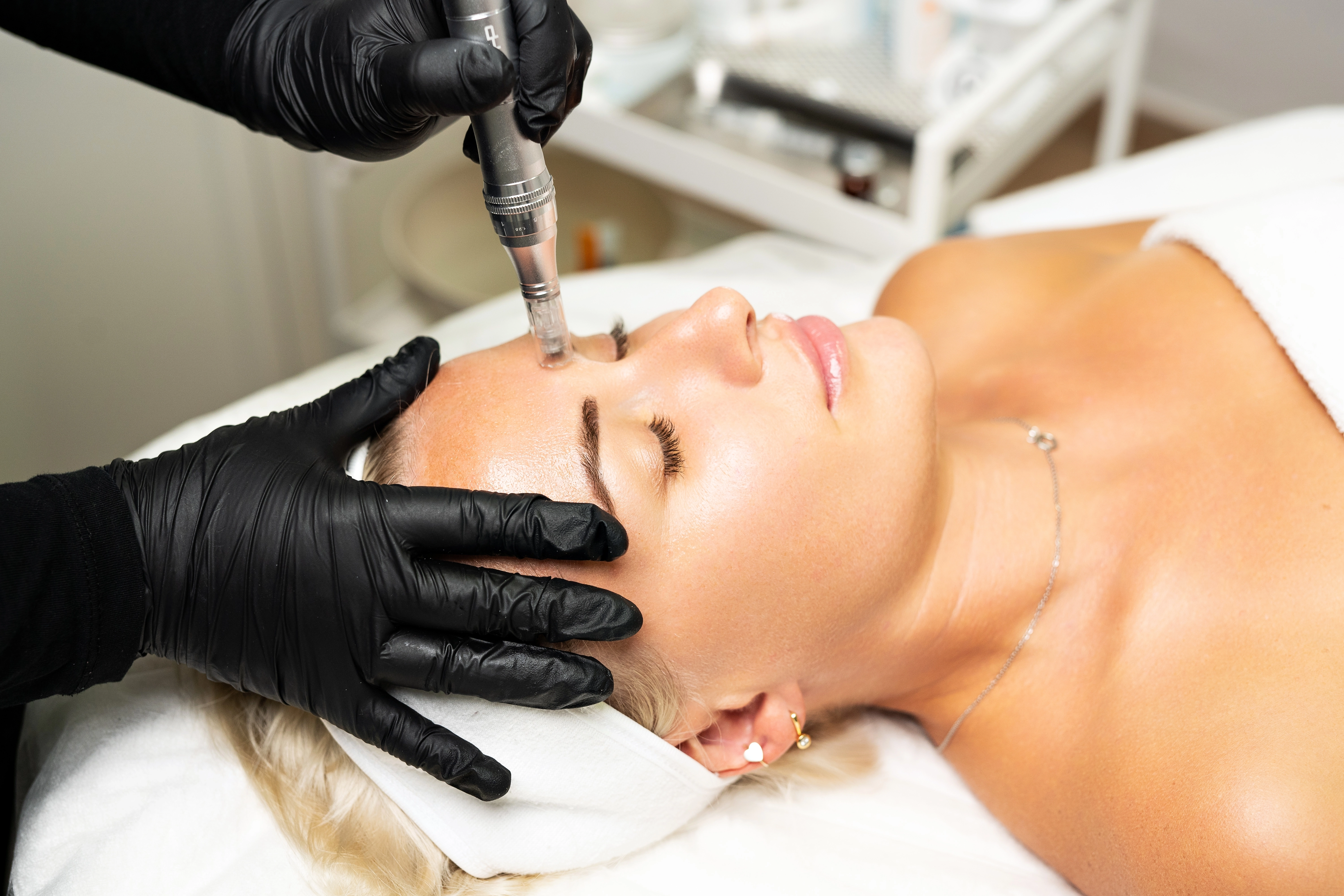
Combining treatments lets each tool do what it does well. A typical plan might pair subcision and TCA CROSS with Frax laser resurfacing. Another might combine RF microneedling with PRP or exosomes for deeper collagen support. Doing just one treatment and expecting everything to change is a common reason patients feel their results have stalled.
Acne scar treatment happens in stages. Active acne should be under control first, so new breakouts do not create new scars. Structural work such as subcision and TCA CROSS often comes early. Resurfacing, RF microneedling and peels then refine texture and tone over a series of sessions.
Collagen rebuilds slowly. Sessions are spaced several weeks apart so the skin has time to respond. Improvement continues for months after each treatment. At each follow-up, we review progress and adjust the plan as your skin changes. We offer treatment series for chemical peels, laser resurfacing, IPL and RF microneedling, which supports consistent progress.
What you do at home affects your results. Between sessions, we typically recommend:
Daily sunscreen to protect healing skin and prevent dark marks.
Gentle cleansing and moisturizing while the skin recovers.
Pausing strong actives such as retinoids around certain treatments, based on our guidance.
Avoiding picking at breakouts or healing skin.
Keeping active acne controlled so new scars do not form.
We give each patient aftercare instructions specific to their treatment.
The right plan depends on your scar types, your skin tone, how much recovery time you can allow and your goals. Someone with mostly dark marks may do well with peels and IPL. Someone with deep rolling scars may need subcision, fillers and laser resurfacing.
During your consultation, we examine your skin and identify each scar type. We discuss which treatments fit your scars and your schedule. You leave with a clear, personalized plan and an understanding of how it may change as your skin responds. You can learn more on our acne scars page or read about our About us.
How to treat different types of acne scars: our approach matches each scar type to the treatments that fit its structure, then combines them for the results. Because most patients have more than one scar type, combination plans built over time tend to produce the most meaningful change. At Natural Beauty Fifth Avenue, Charles Jovellano, MS, FNP-BC; Board-Certified Dermatology Nurse Practitioner guides each patient from diagnosis through follow-up with a plan designed for their skin.